
Welcome to our company
We Are Deals In Inernet Connection, Online Solutions, Creating Servers in Govt. & Private Sectors And Many More Works Related Latest Technologies.

We Create For You
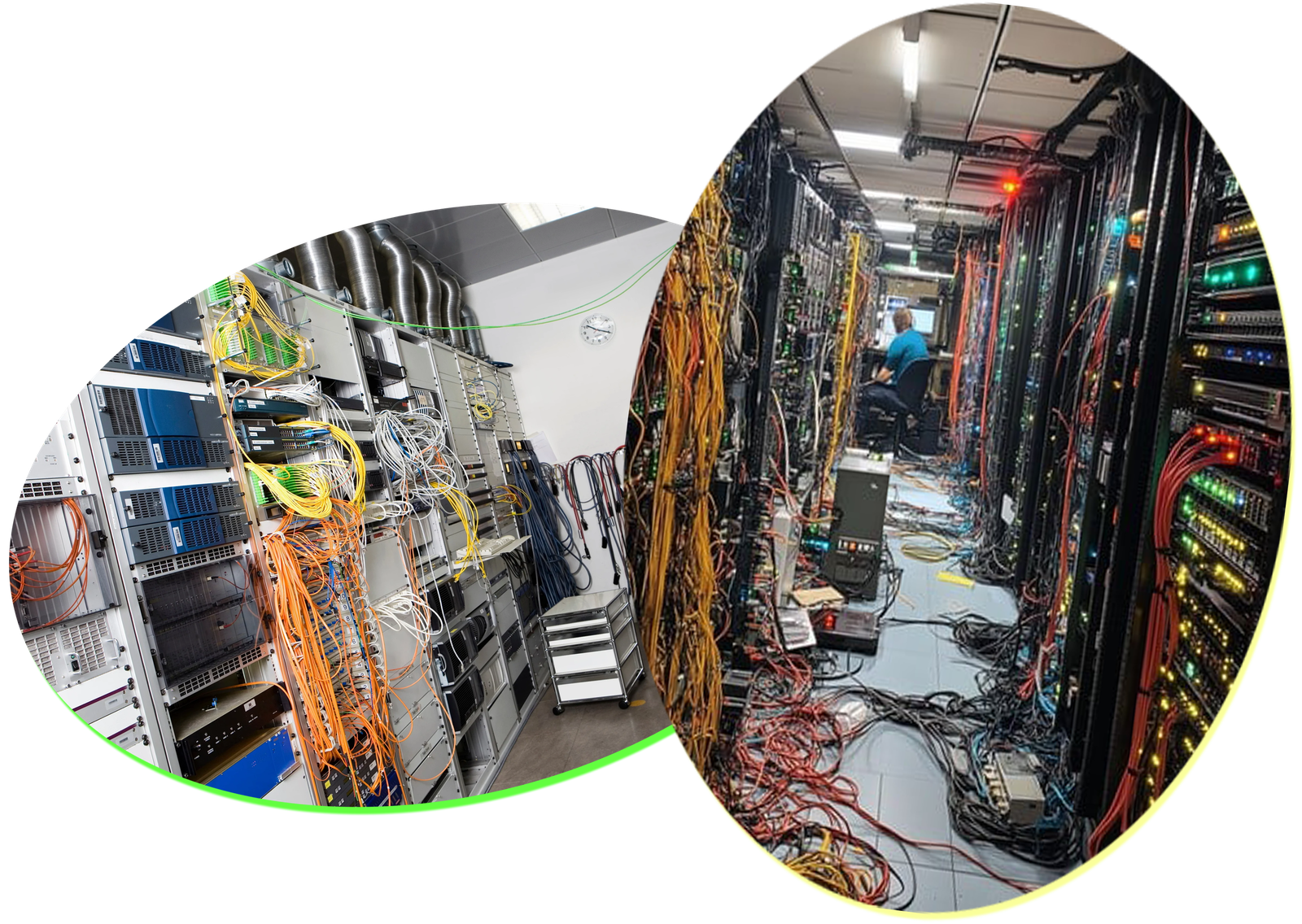
Awesome & Clean Servers
Pricing Table
Note: Be Careful While Recharging, If The Recharge Does Not Reach The Server Then We Will Not Be Responsible For Restarting The Internet.
Hotspot Recharge
PM- Wani
- One Day 10+18% GST
- One Week 55+18% GST
- One Month 120+18% GST
- All Plans Have Unlimited Data
Rs. 25000.00

CMD & Founder

Director

Manager
The internet is a global network that connects millions of computers and devices worldwide. It allows users to share and access information, communicate, and collaborate instantly.
Key features of the internet include:
- Connectivity: Seamless global communication.
- Information Sharing: Access to limitless data and resources.
- Innovation: A hub for technological advancements and creativity.
From its inception in the late 20th century to its current dominance, the internet has significantly influenced human progress.
The PM-WANI scheme, announced by the Department of Telecommunications last month, aims to increase internet connectivity across the country by implementing a decentralised system of public access points. We decided to create an explainer analysing the scheme in which we discuss how, while a step towards the right direction, the scheme faces both foundational and implementational challenges.
What is the PM WANI scheme?
PM WANI (Wi-Fi Access Network Interface) is a scheme meant to increase Wi-fi access throughout the country. The WANI framework contains the following components:
- Public Data Office (PDO): It will establish, maintain, and operate only WANI compliant Wi-Fi Access Points and deliver broadband services to subscribers.
- Public Data Office Aggregator (PDOA): It will be an aggregator of PDOs and perform the functions relating to Authorization and Accounting.
- App Provider: It will develop an App to register users and discover WANI compliant Wi-Fi hotspots in the nearby area and display the same within the App for accessing the internet service.
- Central Registry: It will maintain the details of App Providers, PDOAs, and PDOs. To begin with, the Central Registry will be maintained by C-DoT.
The scheme shall work in the following manner:
- Any entity desirous of becoming a PDO sets up a Wi-Fi access point by purchasing network services from a service provider.
- The PDO registers with a PDOA that is registered on the App.
- Now, any potential user in the vicinity of a Wi-Fi access point, after registering and authenticating themself on the App, selects a PDO to connect to.
- This request is sent to the relevant PDOA who, after, authenticating the user, will display tariff plans to the user.
- Once the payment has been made to the PDOA, the PDOA registers the user and provides them with the requisite Wi-Fi access.
What are its legislative and policy origins?
| Document | Recommendation |
|---|---|
| DoT’s National Digital Communications Policy, 2018 | Mentions the development of of public Wi-Fi hotspots in rural and urban areas as a goal Mentions further liberalizing the spectrum sharing, leasing and trading regime |
| TRAI’s Consultation Paper on Proliferation of Broadband through Public Wi-Fi Networks | Lays down the core principles of an ‘unbundled and distributed model’ for public Wi-FI hotspots. Details the app-based hub framework that WANI has adopted |
What are the proposed objectives of the PM WANI scheme?
It is contemplated that the proliferation of public Wi-Fi networks throughout the country will greatly increase internet access at cheap prices. Increased Wi-Fi access will bring with an improved quality of life, especially in an increasingly digital economy. The deregulated operating requirement is meant to help improve the ease of doing business, and thus potentially provide both employment opportunities and increased disposable income. Furthermore, the decentralised nature of the WANI ecosystem is meant to address last mile connectivity and allow access points to grow organically in places that need them the most.
Internet Access & the Digital Divide
As of June 2020, the number of internet subscribers increased to 749.07 million, a 0.79% increase over the previous quarter, and a 4.2% increase over December 2019. The number of urban and rural subscribers increased to 455.98 million and 293.09 million respectively.
While internet penetration in the country is rising, a persistent digital divide still remains due to factors such as gender gaps and the rural-urban divide. The number of rural subscribers, despite making up a significant majority of the population, is only 64% of the number of urban subscribers, with rural internet density only about a third of urban internet density. Meanwhile, NFHS data suggests that in eight states and two union territories less than 40 percent women have used the internet.
What is public opinion on the scheme?
The scheme has generally been applauded. Many commenters have praised the scheme and said that it will greatly increase internet connectivity across the country. Industry bodies have said that such a move will provide a massive stimulus to employment and entrepreneurship opportunities.
At the same time, several issues have been raised. Foremost among them is the question of security: public Wi-Fis are known to be susceptible to attacks and breaches, while there is a lack of specificity with regards to data protection norms. The economic viability of such a project has also been questioned, given the lack of success of similar models hitherto. Lastly, while a step towards viewing internet access as a ‘positive right’, questions have also been raised about whether the scheme may amount to a dereliction of duty from the state.
Concerns about the security of data and the role of the state
Open public Wi-Fis have been known to be vulnerable to hacks and breaches. The security architecture used may often not possess sufficient security standards, and so may leak data. Furthermore, many websites, including government portals, may not always have security credentials such as HTTPS or SSL certificates, and so accessing such websites through public Wi-Fis may be even more dangerous.The possibility of rogue networks acting as PDOs also exists, where hackers may spoof a legitimate network for malicious purposes.
Furthemore, in the absence of a robust data protection legislation, both usage data and any personal or sensitive information entered for the purpose of authentication may also be at risk. The deregulated environment, while perhaps good for business, only exacerbates the issues. The guidelines for the scheme only discuss this in a cursory manner, stating that PDOAs shall “take all necessary steps to safeguard the privacy and confidentiality of any information about a third party to whom it provides the service” (Para 4(c)). Thus, there is a clear need for comprehensive security guidelines to be included in the framework.
Another peculiarity of the scheme can be found in Para 4(c) of the guidelines, which states that “PDOA shall make necessary provisions for storage of user data for one year to ensure compliance with legal provisions, as required”. This may clash with the RIght to be Forgotten which, while not recognised as an absolute right, is still a key part of India’s privacy framework. Indeed, the latest draft of the Personal Data Protection Bill, 2019 that was introduced in Parliament enshrined the Right to be Forgotten as fundamental.
Lastly, while PM WANI is a major step towards addressing the issues of internet connectivity, the reliance on the private sector and the withdrawal of the state must be analysed. India still has a persistent ‘Digital Divide’, which has only worsened after the onset of the pandemic. Thus, it is crucial that not only is high speed internet connectivity provided, but also that it is done so at low rates, which may not always be possible with the private sector.
Now, as of May 2019, the Universal Service Obligation Fund had Rs. 50,554 crore available for appropriation and usage. Given the very aim of the Fund was the provision of telecom services in rural and remote areas, it is imperative that the Centre urgently use such Funds towards telecom infrastructure (in this context, the increased budgetary allocations to the Fund are to be commended). This would enable the provision of internet connectivity to those areas that need it the most, while also overcoming the hurdle of high capital costs.
Implementation challenges
The economic viability of such projects in the indian contexts must be questioned. The availability of cheap data means that the demand for public data may be limited, especially in urban areas. Similar projects have been implemented before by diverse entities from tech giants like Google and Facebook to small scale players such as WiFi Dabba without much success, with the main issue being cheap and widely available 4G data.
Google even noted that “several governments and local entities have kicked off their own initiatives to provide easier, cost-effective access to the Internet for everyone”. This further underlines the benefit of governmental initiatives in the sector. Furthermore, the ‘aggregator’ model that has been adopted has been heavily critiqued for its exploitation of workers. This may end up prohibiting the increasing of incomes, the achievement of which has been stated as a goal of the scheme. Public sector projects would be able to ameliorate such concerns as well.
Recommendations
In light of the above, here a few steps that may address such issues:
- Stringent security measures: Robust information security protocols must be specified to ensure secure connections. This is especially important in the context of the scale at which the implementation of the scheme is envisioned. Furthermore, stringent data protection measures must be mandated to protect against data leakage and the illicit usage of sensitive information by PDOAs or hackers.
- Increased governmental efforts: The Universal Service Obligation Fund must be the primary medium of broadband deployment, especially in marginalised areas. At the very least, a high level technical committee must oversee a country wide survey, that must be conducted with the aim of partitioning districts into those that would be served by the Fund and those in which the PM WANI scheme could be harnessed.
Important Documents
The internet is one of the most important inventions in the modern world. It has completely changed how we live, work, and communicate. Today, the internet is essential in almost every part of our lives. With just a click, we can find information, talk to anyone around the world, and complete tasks that used to take much longer.
In education, the internet has made learning easier and more accessible. Students can take online courses, watch educational videos, and find resources for research from anywhere. Websites like Khan Academy and educational platforms provide free lessons, making learning possible for people of all ages.
For businesses, the internet has opened up new ways to sell products and reach customers. Companies can create websites, advertise online, and sell their goods globally, which has made global trade easier. The internet has also made remote work possible, allowing people to work from home and achieve a better work-life balance.
In entertainment, the internet offers a wide variety of options. People can watch movies, listen to music, play games, and connect with others through social media. These platforms help people stay informed about news and trends from around the world.
While the internet has many benefits, there are also challenges, such as security issues and the risk of addiction. However, if used wisely, the internet continues to be an amazing tool that makes life better for many people.
In conclusion, the internet is a powerful resource that helps people connect, learn, and grow. Its role in our daily lives will only continue to grow in the future.
One may correctly define the 21st century as the age of science and technology. However, this has been possible not only by the efforts of the current generation but also by the previous generation. The result of one such advancement in the field of science and technology is the Internet. What is the Internet? So the internet can be called a connected group of networks that enable electronic communication. It is considered to be the world’s largest communication connecting millions of users.
The dependence on the internet has been because of multiple advantages that it has to offer – for instance, reducing work stress and changing the face of communication most importantly. Given the current scenario, the Internet has become a massive part of our daily lives, and it is now a challenging task to imagine the world without the Internet. The importance of the Internet in the field of communication definitely cannot be ignored.
Without access to the internet, the ability to share thoughts and ideas across the globe would have been just a dream. Today we can talk to people all over the globe only because of services like email, messenger, etc that are heavily reliant on the internet. Without the internet, it would be hard to imagine how large the world would be. The advent of the internet has made the task of building global friendships very easy.
The youth is mainly attracted by entertainment services. Streaming platforms like Amazon, Netflix, and YouTube have also gained immense popularity among internet users over the past few years. The presence of the Internet is slowly replacing the use of traditional newspapers among people too.
In addition to these, it has various recreational advantages to offer as well. For instance, people can search for fun videos to watch and play games online with friends and other people all over the globe. Hence, we can say the internet holds immense importance in today’s era. Internet technology has indeed changed the dynamics of how we communicate, respond or entertain ourselves. Its importance in everyday life is never-ending. It can be correctly said that the internet plays a great role in the enhancement of quality of life. In the future too, we will see further changes in technology